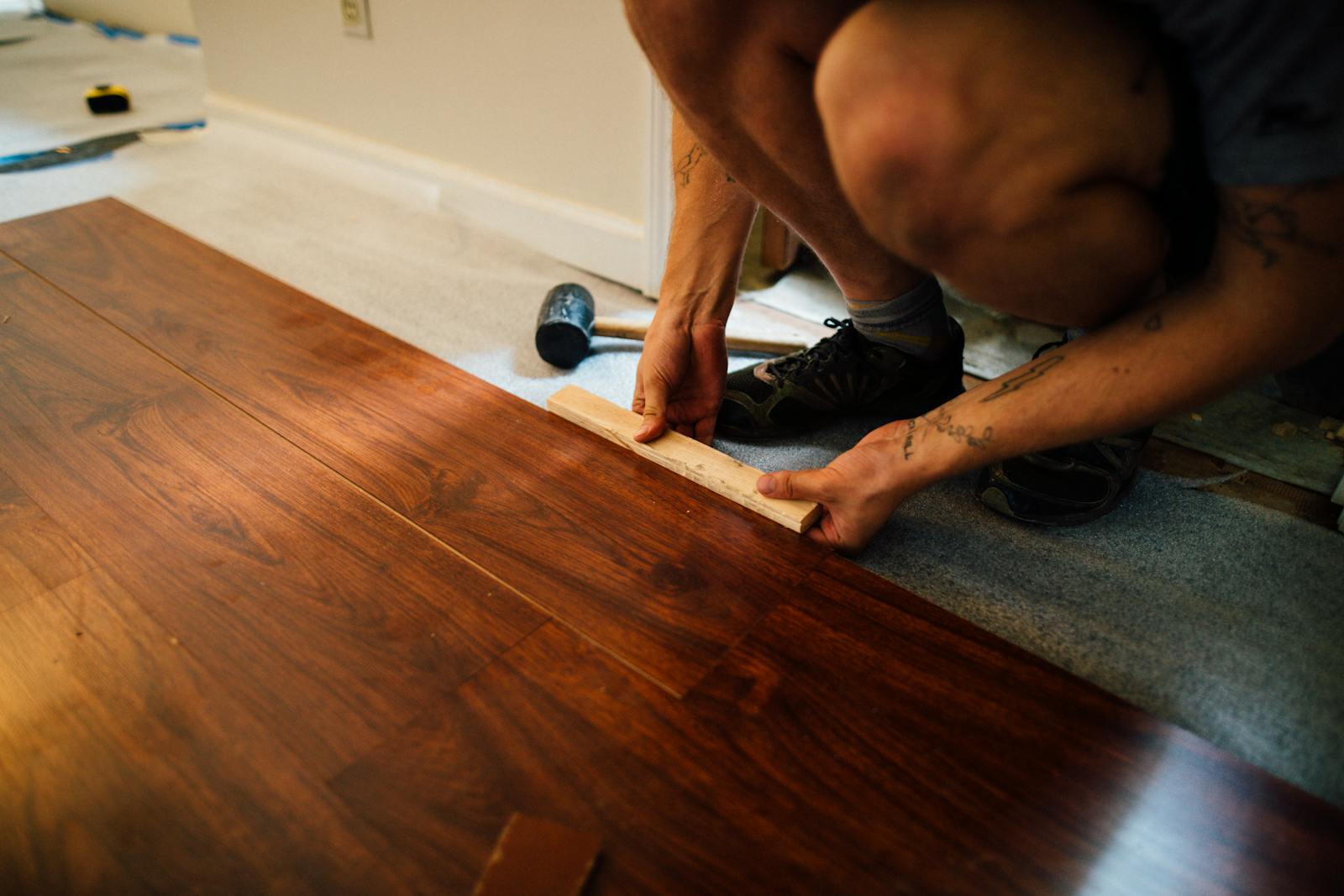
Flooring decisions start with the material and the condition below it. A damaged plank can be a localized repair, while repeated movement or moisture can point to a larger substrate problem. New flooring also depends on transitions, room layout and the state of the existing subfloor.
This hub helps route the project by material and by whether the goal is new installation, local repair or larger replacement.
Flooring services
Choose the service that matches your project.
Choose the Flooring Material First
What the Subfloor Can Change
A floor finish sits on something. Unevenness, movement, moisture or damaged substrate can affect the finished floor no matter which material is chosen. Surface work should not be used to hide an unresolved subfloor problem.
Install, Repair or Replace?
Matching Existing Material
Repair is often limited by availability. Older planks, tile, sheet patterns or wood finishes may no longer match exactly. A good repair plan should decide whether a visible transition is acceptable or a larger area should be replaced.
Flooring Questions
Can one damaged plank or tile be replaced?
Sometimes, if compatible material is available and the substrate problem is localized.
Does moisture matter for every floor?
Yes, though the way it affects each material differs.
What if I do not know the material?
Start with photos and the broad flooring page; the material can be identified before the project is routed.
Transitions and Adjacent Rooms Matter
Flooring rarely ends in the middle of nowhere. Doorways, stairs, cabinets, baseboards and neighboring rooms create visible transitions that affect both layout and repair decisions. A new floor that sits noticeably higher than the adjacent room may need a different transition strategy than a thin resilient material.
For repairs, the location of damage matters too. A matching plank near a wall may be easier to integrate than one in the middle of a continuous run. Tile and glued resilient products have their own access issues. That is why the material-specific pages go beyond a generic "replace the damaged piece" approach.
- Material identified where possible.
- Room and adjacent transitions noted.
- Subfloor/moisture concerns identified.
- Existing damaged area mapped.
- Matching repair material availability checked.
- Baseboard/trim or cabinet interactions noted.
- Repair vs replacement scope chosen after those conditions are known.
Use the site chat with the room, material if known, and whether the issue is new installation, localized damage or a full-room replacement.