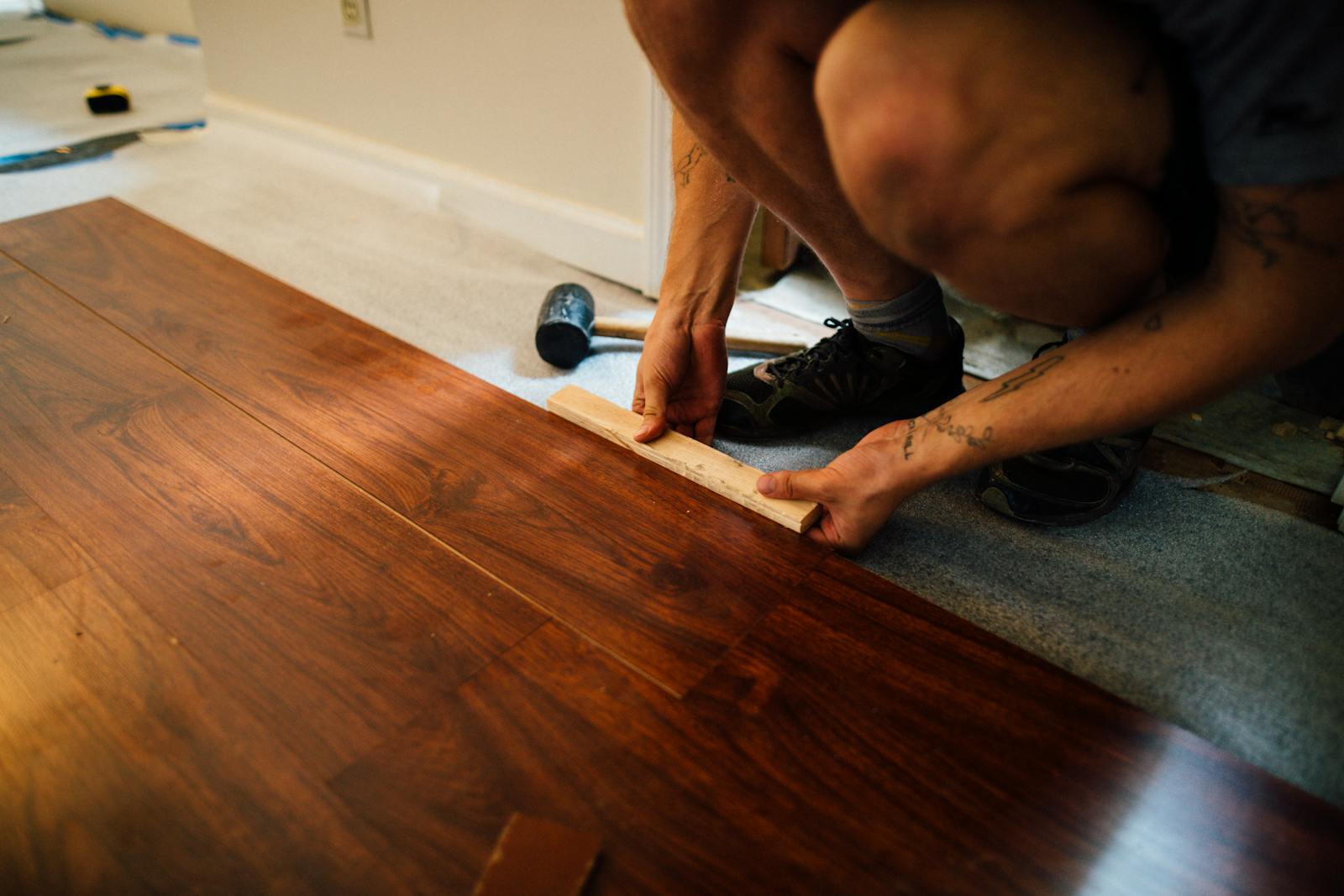
Vinyl flooring can mean sheet material, click-lock plank, glue-down plank or tile. Those formats repair differently, so the product type should be identified before damaged areas are approached.
Sheet, Plank or Tile?
- Sheet vinyl.
- Click-lock vinyl plank.
- Glue-down vinyl plank/tile.
- Loose-lay or product-specific system.
- Existing unknown resilient floor.
Vinyl-Floor Conditions and Installation Method
A floor that is lifting, buckling or separating can reflect the material itself or a condition below it. Moisture and substrate issues should be considered before replacing only the visible piece. A click-lock plank may be accessed by disassembling from an edge, while glued flooring creates a different repair path. The actual product system matters.
Seams, Doorways & Transitions
- Tear in sheet material.
- Lifted seam/edge.
- Separated click joint.
- Damaged individual plank/tile.
- Broader bubbling or movement.
- Transition strip/doorway issue.
Repair vs Full-Room Replacement
Matching product availability, damage location and substrate condition influence whether local repair is practical.
Vinyl Flooring Questions
Is vinyl the same as linoleum?
No.
Can one damaged plank be replaced?
Sometimes, depending on the installation method and material availability.
Different Vinyl Formats Fail in Different Ways
Sheet vinyl can tear or lift at seams and edges. Click-lock plank can separate at joints. Glue-down plank or tile can release from the substrate. Those symptoms should be interpreted in the context of the installation method rather than grouped together as "vinyl damage."
Transitions also deserve attention in new work. A vinyl floor can be relatively thin, which affects how it meets tile, wood or carpet in adjacent rooms.
- Sheet/plank/tile format.
- Installation method.
- Subfloor condition.
- Moisture concern.
- Doorway/adjacent floor height.
- Seam/edge condition.
- Matching replacement material.
- Damage localized vs repeated.
For plank and tile systems, the direction and pattern of the existing floor can affect a localized repair. Replacement pieces should follow the established orientation so the repair does not create an obvious visual break.
For plank and tile products, replacement pieces should follow the established orientation and pattern. If the flooring continues through several connected rooms, a localized repair should also consider how the run reads across those spaces.
Transitions at stairs, cabinets or fixed thresholds should also be checked before the repair area is opened, because those boundaries can limit how the flooring can be disassembled or replaced.
Use the site chat with the vinyl format, room and damage type.