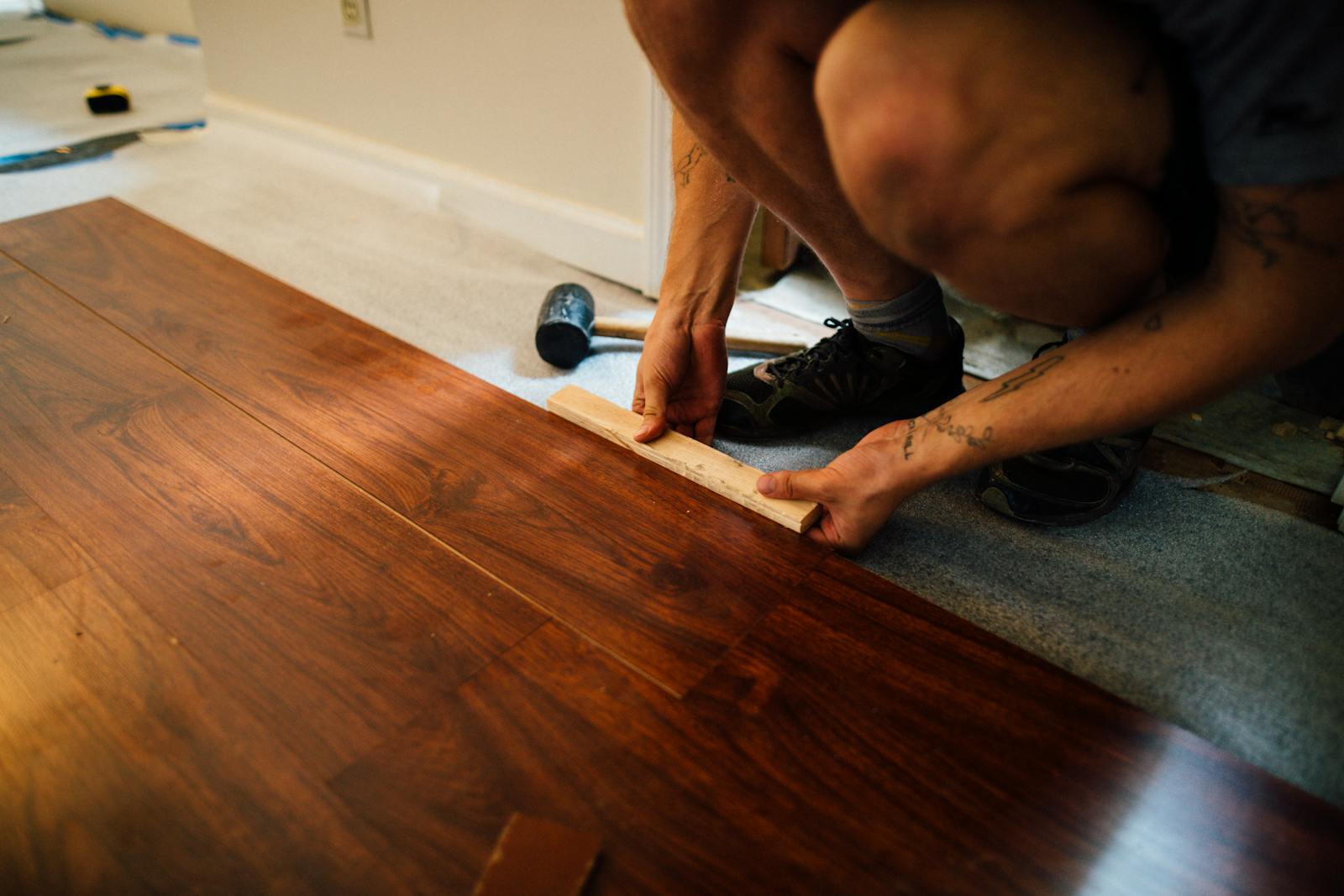
Laminate flooring is usually a plank system with a locking edge that depends on a flat, stable surface underneath. Repair becomes difficult when swelling or damaged locking edges extend beyond one plank.
New Floor or Existing Damage?
- New installation.
- One/few damaged boards.
- Separated joints.
- Edge chipping.
- Moisture-swollen area.
- Larger room replacement.
Subfloor Conditions, Room Edges and Damaged Laminate
A floating laminate floor can bridge very small variations, but broad unevenness can make joints flex or separate. The substrate should be clean, sound and appropriate for the selected product. Doorways, adjacent flooring heights and expansion/perimeter conditions shape the layout. Swollen laminate often points to moisture exposure. Replacing the visible boards without resolving the source can repeat the damage.
Matching Replacement Boards
Laminate Questions
Can one plank be replaced?
Sometimes, depending on the locking system, location and material availability.
Can swollen laminate be flattened and reused?
Damaged material condition should be evaluated rather than assumed reversible.
Floating Floors Need Perimeter and Transition Space to Work
Laminate often expands and contracts as a floating system. Pinching the floor tightly under fixed trim or around a transition can contribute to movement problems. New installation should follow the selected product's perimeter and transition guidance.
For repair, access matters. A damaged plank near the edge of the room may be reachable by reversing the locking sequence, while a board in the middle can require a different approach. The actual locking design determines what is practical.
- Subfloor reasonably flat and sound.
- Moisture source absent/resolved.
- Product acclimation/installation guidance available.
- Perimeter/transition requirements understood.
- Doorway heights checked.
- Matching repair boards available if needed.
- Baseboard/quarter-round sequencing planned.
Furniture and fixed cabinets can also affect repair access. A floating floor may run under removable furniture but terminate around fixed cabinetry, changing the path to a damaged plank.
A repair that reaches a doorway should include the transition piece and adjacent floor height in the plan. Furniture and fixed cabinetry can also affect how easily a damaged floating plank can be reached.
Use the site chat with the room, plank type if known, damage pattern and whether matching material is available.