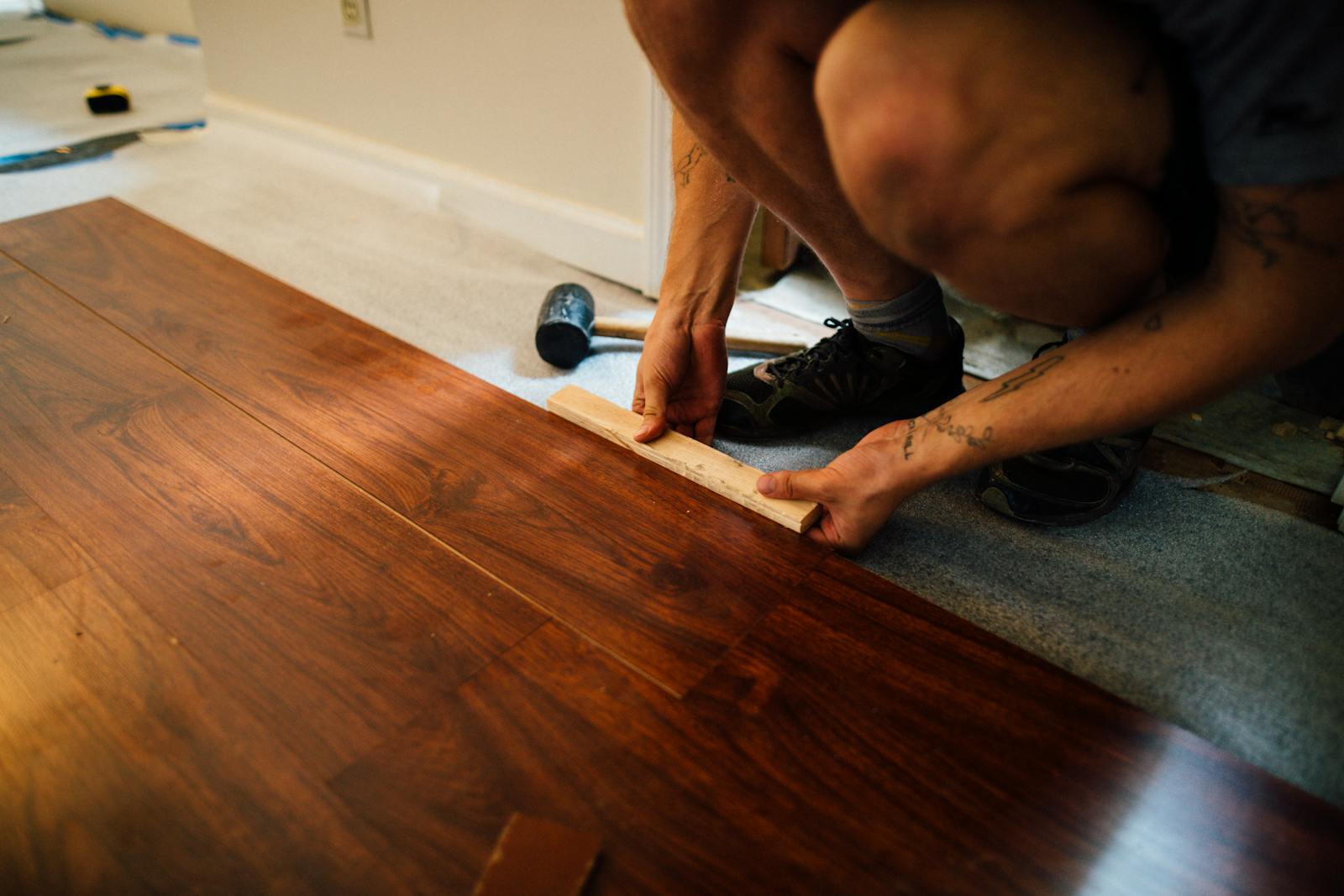
Wood flooring repair is often a matching problem as much as a carpentry problem. Species, board width, thickness, grade and finish can all make a replacement board stand out even when it fits physically.
Solid vs Engineered Wood
- Solid wood.
- Engineered wood.
- Existing unknown wood product.
- New installation.
- Localized board repair.
- Larger replacement/refinish decision.
Supporting New Wood Flooring and Matching Existing Boards
Nailed, stapled, glued or floating systems create different repair and installation conditions. Moisture or substrate movement should be addressed before new boards are used to hide the symptom. Board width and thickness need to fit the opening, while species and finish affect appearance. Exact visual matching may not always be possible.
Scratches, Gaps & Damaged Boards
Surface wear can belong to refinishing rather than board replacement. Loose, split or severely damaged boards can require carpentry repair.
Wood Flooring Questions
Can a new board match an old floor exactly?
Not always; age and finish can change color.
Does this page include full-floor sanding/refinishing?
That may be a specialist refinishing scope.
Wood Moves and Ages as a Natural-Looking Surface
Existing wood can change color from sunlight and finish wear, so a new repair board may match the species and width while still looking lighter at first. That visual difference should be expected rather than hidden with unsupported claims of exact matching.
Gaps can also have different meanings. Small seasonal changes are different from loose boards, broken tongues or widespread movement. The condition should be observed before deciding that board replacement is necessary.
- Solid vs engineered.
- Board width/thickness.
- Species/appearance if known.
- Installation method.
- Subfloor/moisture context.
- Surface finish condition.
- Localized broken/loose boards.
- Refinishing vs board-repair decision.
Matching limitations explained.
Wood flooring near exterior doors, kitchens or other moisture-prone areas may show localized damage for reasons that need attention before new boards are installed. The repair should not ignore the exposure that caused the problem.
Use the site chat with the room, solid/engineered type if known and whether the issue is surface wear, board damage or full replacement.