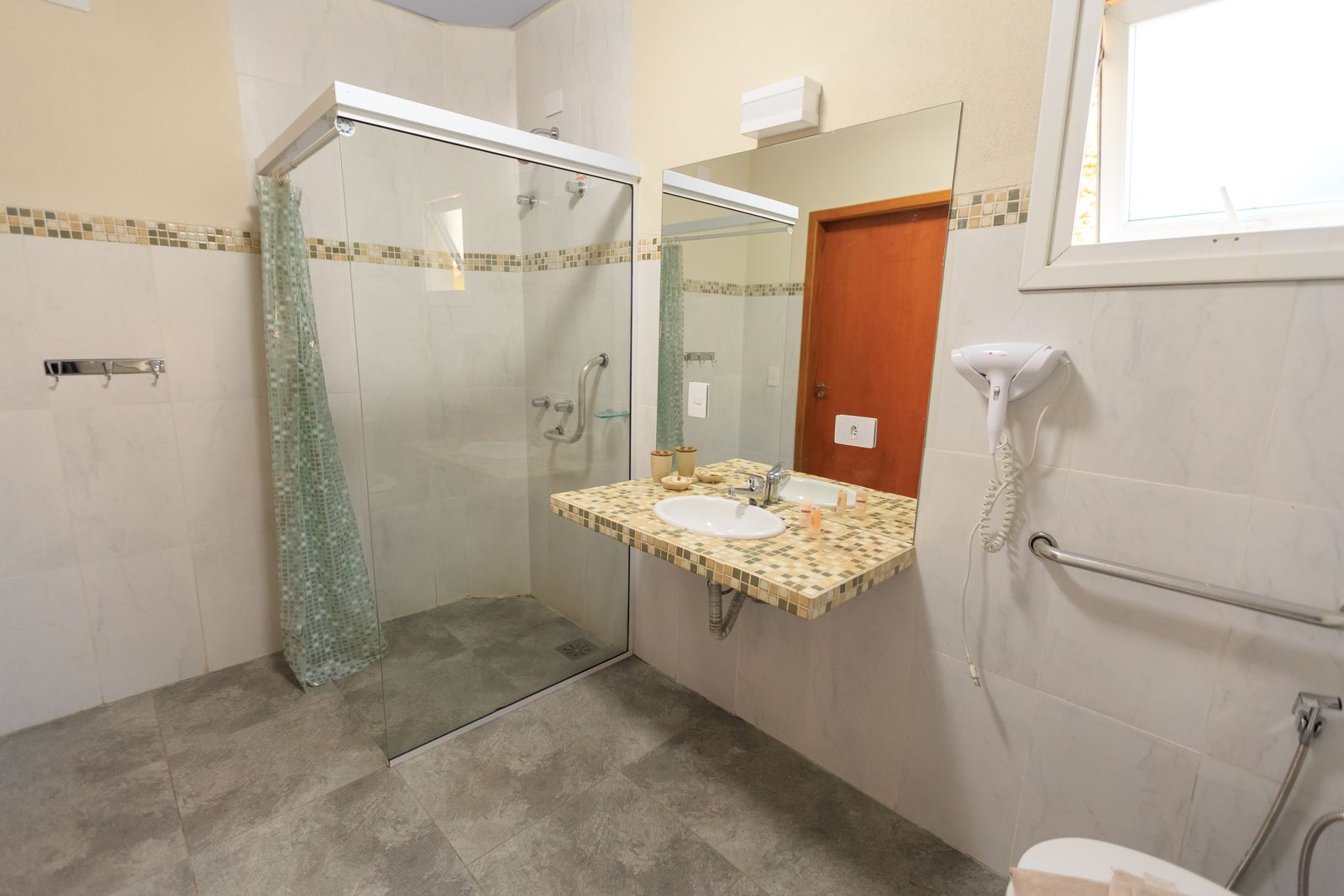
A grab bar is useful only when its placement, product and mounting conditions make sense for the person and the location. Installing one is therefore more than choosing an open spot on the wall. The surface has to be evaluated, the bar has to be appropriate for the intended use and the final position should reflect the support point the resident actually wants.
This page covers new grab-bar installation and replacement in Champaign. It stays focused on the physical installation. It does not make medical claims, guarantee fall prevention or promise that a particular installation meets every accessibility standard without project-specific review.
Where Grab Bars Can Add a Support Point
Bathrooms are the most common context because tubs, showers and toilet areas combine limited space with wet or changing surfaces. Other transition points in the home may also be worth discussing when a support bar is appropriate for the structure and intended use.
The location should be chosen around the resident's practical goal, not copied from a generic diagram. A bar used while entering a tub serves a different purpose from one intended beside a toilet or along a shower wall.
Secure Installation Starts Behind the Finished Surface
Tile, drywall or another finish is only the visible surface. The installation depends on what can safely support the product behind or within that surface and on the mounting method specified for the bar and wall condition.
That is why the project cannot be reduced to a fixed number of screws or a universal mounting recipe. Wall construction, existing backing, stud locations, tile condition and the selected product can all affect the installation approach.
Before installation, confirm three things: the intended support location, the grab-bar product and the actual mounting condition. If the wall cannot support the planned installation as presented, the correct next step is to change the scope rather than improvise.
New Installation or Replacement
A new installation begins with the desired support location and the available structure. Replacement starts with an existing bar or mounting points that may already affect the wall finish and layout.
An existing grab bar that is loose, damaged or poorly positioned should not automatically be reinstalled in exactly the same place. The condition of the wall and the reason for replacing it need to be considered first.
When a Broader Bathroom Safety Project Makes More Sense
One grab bar may solve one clearly defined support need. A broader project makes more sense when several barriers are connected, such as tub or shower entry, toilet clearance, a raised threshold or a bathing fixture that is difficult to use.
In those cases, Bathroom Safety Installation or Mobility & Aging-in-Place Modifications can provide a better starting point because they allow several changes to be considered together. Walk-in tubs, toilet-safety products, ramps and handrails each have their own installation requirements and service options.
Grab Bar Installation Questions
Can grab bars be installed on tile?
Tile can be part of a suitable installation, but the visible tile alone does not determine whether the wall can support the product. The underlying mounting condition still matters.
Where should a grab bar go?
The correct location depends on the specific support goal, the resident's preference and the structure available at the wall. A universal placement diagram cannot account for every person, product and wall condition.
Can an old grab bar be replaced?
Yes, replacement can be discussed, but the existing holes, wall condition and reason for replacement should be evaluated rather than assumed to be reusable.
Does this service guarantee ADA compliance?
No. Code or accessibility requirements depend on the specific project and the rules that apply to it, so compliance has to be evaluated for the actual installation.