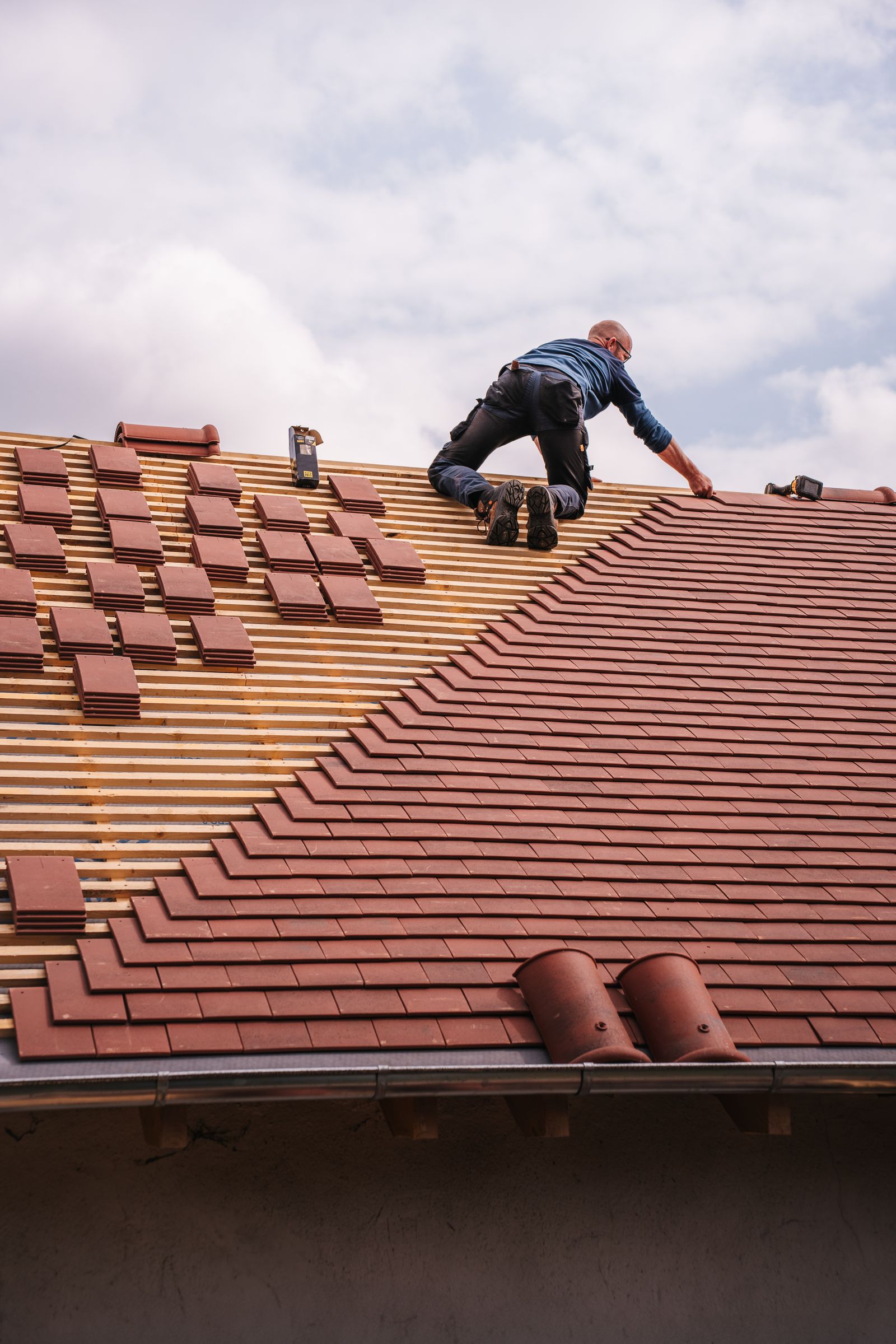
A roof problem does not automatically mean the entire roof needs to be replaced. A leak can begin at a flashing transition, a penetration or a localized area of damaged roofing. Wind can affect one section more than another. A missing shingle or damaged edge may be obvious from the ground while the source of interior water entry is somewhere else.
Roof repair in Champaign should begin by narrowing the symptom to the part of the roof system that is actually affected. The goal is to understand whether the problem is localized and repairable or whether it is one sign of broader roof deterioration.
Roof Problems That May Be Repairable
Localized repairs are most realistic when the surrounding roof remains serviceable and the source of the problem can be isolated. That could involve missing or damaged shingles, flashing around a transition, a penetration, a small weather-damaged section or another specific component.
Interior staining alone does not identify the repair. Water can travel before it becomes visible inside the house, so the place where a ceiling stain appears may not be directly below the roof defect.
The repair-versus-replacement decision is less about the size of the visible symptom than the condition of the roof around it. A small leak on a roof with broadly deteriorated materials may point toward a larger project. A more dramatic localized defect on an otherwise serviceable roof may still be repairable.
Material condition, repeated problems, the extent of damaged areas and whether a durable repair can integrate with the existing roof all matter. Replacement should not be presented as the default answer simply because a leak exists, and repair should not be used to postpone a broader problem when failure is widespread.
How a Roof Repair Is Evaluated
The evaluation should connect the symptom to the roof condition. That means looking at the affected area, nearby transitions and the relationship between the exterior roof and any interior evidence of water entry. The roof material also matters because asphalt shingles, metal roofing and flat or low-slope systems fail and repair differently.
A useful assessment should also identify boundaries. A flashing issue next to a chimney may involve the roofing transition without making the entire chimney a roof-repair task. Cross-service storm damage may involve siding, gutters or fencing as well as roofing. Those projects should be routed accordingly rather than buried inside a single roof page.
- 011. Document the symptomleak, missing material, visible damage or weather-related concern.
- 022. Identify the roof area and nearby transitionsedges, vents, chimney, valleys or other penetrations.
- 033. Check the surrounding roof conditiondetermine whether the issue is truly localized.
- 044. Define the practical repair boundaryroof-only repair, material-specific service, chimney-related work or broader storm/exterior project.
What a Repair Project Can Include
The exact work depends on the diagnosed condition. A repair may involve replacing localized damaged roofing, addressing a transition or penetration, correcting a small affected section or restoring the immediate area around a defect. There is no single repair method that fits every roof problem.
If the repair requires a material-specific approach, the asphalt shingle, metal roofing or flat/low-slope pages provide the better context. If the problem extends beyond the roof, the related exterior pages help keep each part of the project within its proper scope.
Roof Repair Questions
Does a leak always mean I need a new roof?
No. A leak is a symptom. The extent and condition of the surrounding roof determine whether repair or replacement deserves consideration.
Can storm damage be repaired locally?
Sometimes, when the affected area is limited and the surrounding roofing remains suitable for repair. Broader storm damage may involve several exterior systems.
What if the leak is near a chimney?
The roof-to-chimney transition may be part of the issue, but major chimney repair belongs to the chimney service rather than being folded into ordinary roof repair.
When should I use a material-specific roofing page?
Use those pages when the material itself is central to the project, such as metal roofing, asphalt shingles or a flat/low-slope roof.