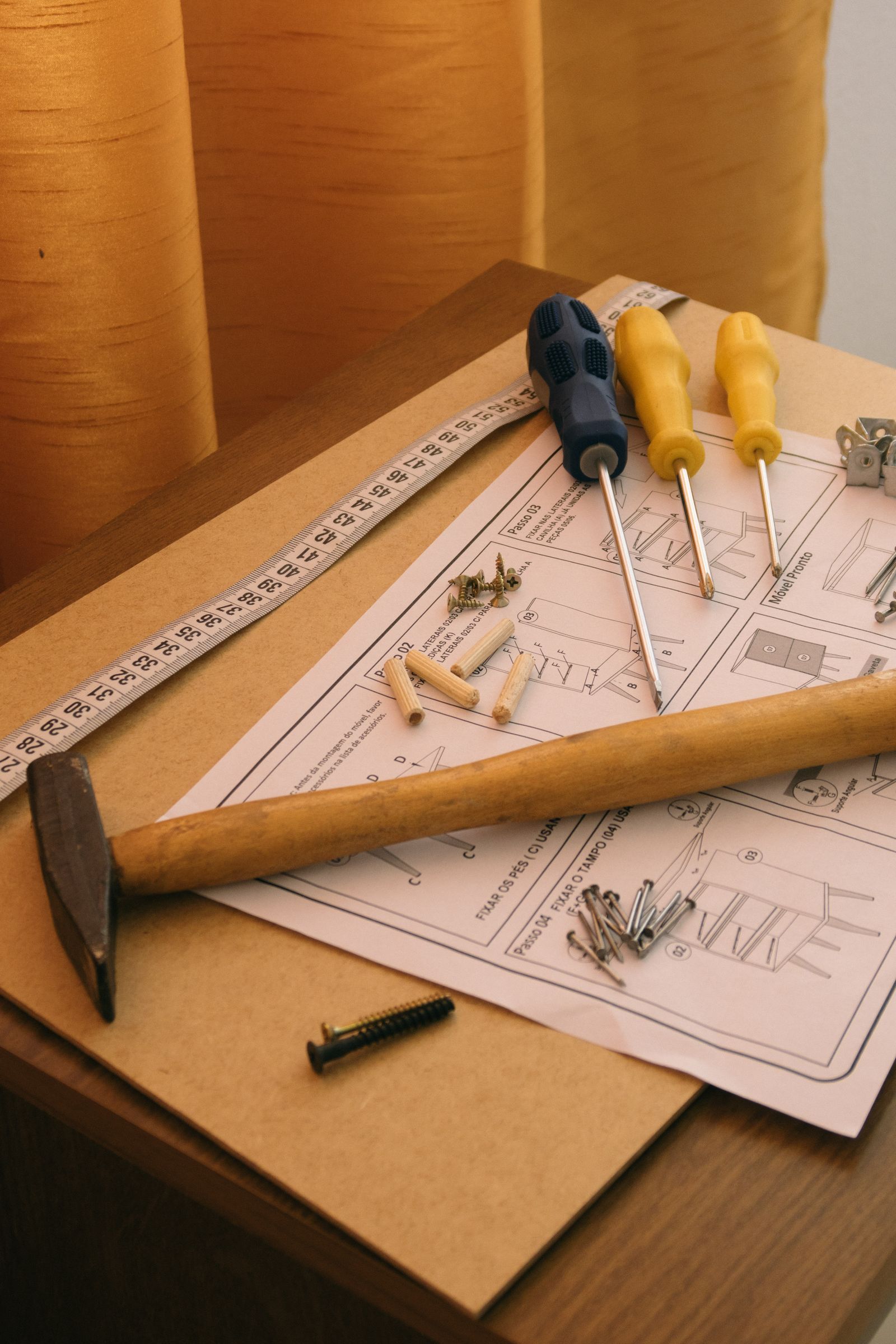
Nursery furniture deserves a product-specific approach because cribs, changing tables, dressers and storage units can include manufacturer safety hardware that should be installed as supplied rather than substituted or improvised.
Nursery Furniture Needs a Product-Specific Assembly Plan
Manufacturer Instructions, Safety Hardware and Wall Restraints
If a part is missing, damaged or modified, continuing assembly may no longer be appropriate. Safety-critical hardware should not be replaced with an improvised look-alike fastener. Some products include anti-tip or wall-restraint hardware. Whether it can be used depends on the product instructions and the actual wall condition. Nursery furniture often includes small hardware pieces that look interchangeable but are not. A crib may use different bolts at different joints, and a dresser restraint kit may include hardware intended for a specific wall or product connection. Keeping those parts with the instructions reduces the risk of assembling a product with the wrong fastener in a critical location.
The final setup should also leave adjustable or removable pieces operating as intended. Drawers should move normally, crib components should sit in their manufacturer-designed positions and no safety-related hardware should be omitted simply because the product can stand without it.
- All required manufacturer hardware used.
- No damaged structural panel or rail.
- Adjustable pieces move through normal product positions.
- Restraint hardware handled according to product and wall condition.
- Instructions retained for future adjustment/disassembly.
- No improvised substitution of safety-sensitive components.
For multi-piece nursery sets, each product should remain separated through assembly. Hardware from a dresser should not be mixed with crib or changing-table hardware simply because the fasteners look similar. Keeping each product's parts grouped preserves the manufacturer's intended configuration.
Use the site chat with the product type/model and whether all instructions and manufacturer hardware are present.
Missing or Modified Parts Are Not an Assembly Shortcut
A damaged rail, broken panel or missing crib component is a product problem, not something to solve by changing the assembly method.
- Missing manufacturer component.
- Damaged structural panel or rail.
- Previously modified safety hardware.
- Wall cannot accept specified restraint.
- Instructions/model information unavailable for a safety-sensitive assembly.
Nursery Furniture Questions
Does assembly guarantee the product is safe for every child?
No. Assembly follows the product instructions; product selection, recalls and child-use decisions remain separate.
Can ordinary dressers use the general furniture page?
Yes, unless the item is being handled as part of a nursery-specific project.